
Article
Beam Smoke Detector: Working Principle & Applications
Oct 2026
Direct Answer
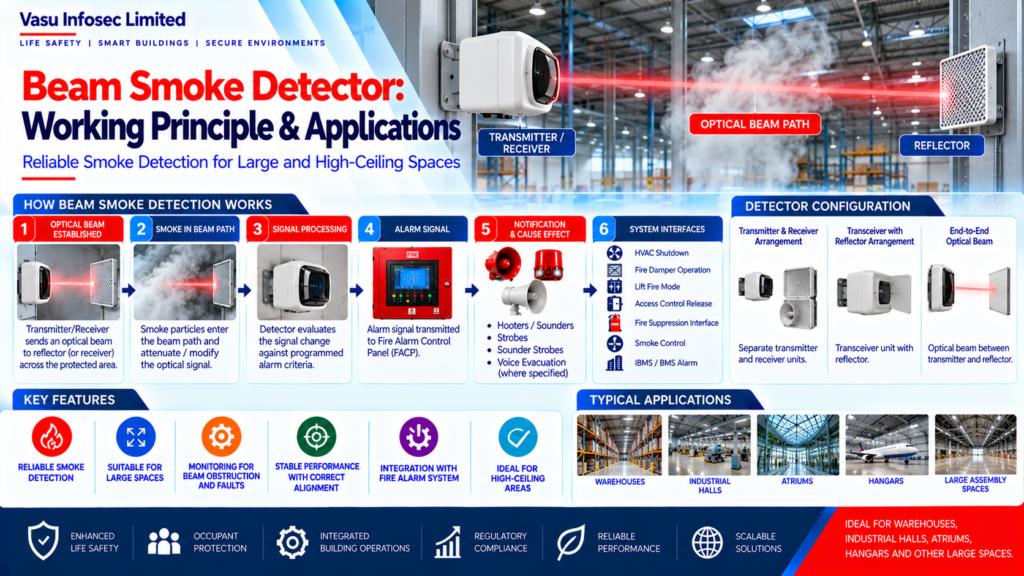
A beam smoke detector is an optical smoke detection system that monitors a beam path across a protected space. When smoke enters the path, it changes or attenuates the received optical signal; the detector evaluates that change against its approved alarm criteria and sends an initiating signal to the Fire Alarm Control Panel (FACP). It can be useful in large or high-ceiling spaces where point detectors may be impractical, subject to the selected equipment and approved design.
1. Engineering Overview
A Beam Smoke Detector is an optical smoke detection system designed for areas where conventional point smoke detectors may be impractical or where large open spaces require an alternative detection arrangement. The system detects smoke by monitoring changes in an optical beam path between a transmitter / receiver arrangement and a reflector or receiving unit, depending on the approved detector configuration.
2. Beam Smoke Detection Architecture
Beam Transmitter / Receiver → Optical Beam Path → Reflector / Receiver Arrangement → Smoke Attenuation / Signal Change → Detector Processing → Fire Alarm Control Panel → Alarm Notification & Cause / Effect Functions
| Stage | Function |
| Optical beam established | The approved transmitter/receiver or reflector arrangement establishes an optical path across the protected area. |
| Normal signal monitoring | The detector monitors the received optical signal under normal operating conditions. |
| Smoke affects the beam | Smoke in the beam path attenuates or modifies the received signal. |
| Detector processing | The detector evaluates the signal change against its configured alarm criteria. |
| FACP and system response | The initiating signal is received by the panel; notification and programmed Cause & Effect functions operate where specified. |
3. Working Principle
The detector establishes an optical beam across the protected area. Under normal conditions, the received optical signal remains within the expected operating range. When smoke enters the beam path, it attenuates or modifies the received signal. The detector evaluates the change against its programmed alarm criteria and transmits an alarm condition to the Fire Alarm Control Panel.
4. Detector Configuration
Beam smoke detection systems may use different optical arrangements depending on the manufacturer and approved equipment. Typical arrangements include:
- Transmitter and receiver arrangement
- Transceiver with reflector arrangement
- End-to-end optical beam arrangement
The final configuration should follow the approved manufacturer system and project design.
5. Large-Area Applications
Beam smoke detectors are particularly useful for large or high-ceiling spaces where installation and maintenance of numerous point detectors may be difficult. Potential applications include:
- Warehouses
- Industrial halls
- Atriums
- Large assembly spaces
- High-bay areas
- Hangars
- Large storage facilities
6. Optical Beam Path
The optical beam path should remain clear and stable during normal operation. The engineering arrangement should consider structural movement, building settlement, vibration, temperature effects and other conditions that may affect beam alignment.
7. Beam Alignment
Correct alignment is essential for reliable operation. During installation and commissioning, the beam should be aligned according to the manufacturer’s specified procedure. Alignment should consider:
- Transmitter / receiver position
- Reflector position, where applicable
- Beam path clearance
- Structural stability
- Access for adjustment
- Environmental influences
8. Smoke Detection Performance
The detector responds to a change in the optical signal caused by smoke within the beam path. Alarm thresholds and signal-processing characteristics should be set in accordance with the approved detector design and manufacturer requirements.
9. Fault and Obstruction Monitoring
Beam systems may provide monitoring for conditions that could affect detector operation, such as beam obstruction, alignment loss or other abnormal conditions, depending on the selected equipment. These conditions should be correctly differentiated from a genuine fire alarm wherever the approved system provides such functionality.
10. Application Selection Criteria
Beam smoke detection should be evaluated based on:
- Ceiling height
- Protected area size
- Building geometry
- Structural movement
- Ambient conditions
- Dust / contamination
- Temperature variation
- Air movement
- Accessibility
- Maintenance requirements
- Required detection performance
11. Installation Considerations
Installation should follow approved drawings and manufacturer requirements. The installation should verify:
- Correct mounting height
- Correct beam path
- Stable mounting surfaces
- Adequate clearance
- Accessibility
- Alignment provisions
- Cable routing
- Protection from physical damage
12. Environmental Considerations
Environmental conditions can influence optical beam detection. Dust, steam, condensation, smoke from non-fire sources, temperature variation and structural movement should be assessed during design to minimise nuisance alarms and unwanted fault conditions.
13. Integration with Fire Alarm System
The beam detector should be correctly interfaced with the Fire Alarm Control Panel. Integration should verify:
- Alarm signal transmission
- Fault signal transmission
- Device / zone identification
- Notification operation
- Cause & Effect functions
- Event recording
14. Testing and Commissioning
Testing should demonstrate correct beam detector operation and integration. Testing may include:
- Beam alignment verification
- Normal operating condition
- Controlled alarm simulation
- Fault / obstruction simulation, where supported
- Panel indication
- Device / zone identification
- Cause & Effect testing
- Reset and restoration
Testing procedures, acceptance criteria and responsibilities should follow approved project documentation, manufacturer instructions and the agreed scope. The list above is indicative and does not itself establish certification or project acceptance.
15. Inspection and Maintenance
Periodic inspection and maintenance should maintain the optical path, alignment and detector performance. Activities may include:
- Visual inspection
- Optical surface cleaning, where permitted
- Alignment verification
- Mounting stability inspection
- Fault review
- Functional testing
- Record updating
16. Common Engineering Considerations
Engineering review should verify:
- Suitability for the protected space
- Correct optical arrangement
- Beam path clearance
- Mounting stability
- Alignment
- Environmental suitability
- Fire alarm interface
- Maintenance access
- Fault monitoring
- Documentation
17. Documentation
Beam detector documentation should include, as applicable:
- Detector datasheet
- Beam layout
- Equipment schedule
- Mounting details
- Detection zoning
- Cause & Effect Matrix
- Alignment / commissioning records
- Testing records
- Maintenance records
- As-built documentation
18. Engineering Objective
Suitable Large-Area Detection → Stable Optical Beam → Reliable Smoke Attenuation Detection → Accurate Alarm / Fault Identification → Effective Fire Alarm Integration → Verified Commissioning → Maintainable Beam Detection → Reliable Fire Safety Performance
Frequently Asked Questions
What is a beam smoke detector?
It is an optical detector that monitors a beam path across a protected area and detects smoke by evaluating changes in the received optical signal.
Where are beam smoke detectors commonly used?
Potential applications include warehouses, industrial halls, atriums, large assembly spaces, high-bay areas, hangars and large storage facilities.
How does a beam smoke detector detect smoke?
Smoke entering the optical path attenuates or modifies the received signal; the detector compares the change with its configured alarm criteria.
Why is beam alignment important?
Correct alignment helps the detector maintain a stable optical path and operate according to the manufacturer’s requirements.
Can an obstruction cause a fault?
Depending on the selected equipment, beam obstruction or alignment loss may produce a fault or abnormal-condition indication. The approved system should distinguish such conditions from fire alarm where supported.
What should be checked during commissioning?
Checks may include alignment, normal operation, controlled alarm simulation, supported fault/obstruction simulation, panel indication, identification, Cause & Effect and reset/restoration.
Engineering and Publication Notes
This article provides general information based on the supplied source document. Detector configuration, beam range, mounting height, spacing, alarm thresholds, fault behaviour and maintenance requirements depend on the selected equipment, manufacturer instructions, approved design and applicable requirements.
No numerical range, coverage value, code clause or compliance status is asserted in this draft. Mention of a possible application or interface does not establish suitability for every site or inclusion in Vasu Infosec Limited’s contractual scope.
SEO and CMS Metadata Suggestions
| Field | Suggested content |
| SEO title | Beam Smoke Detector: Working Principle & Applications | Vasu Infosec |
| Meta description | Learn how beam smoke detectors work, where they are used, and what to consider for alignment, environmental suitability, installation, commissioning and maintenance. |
| Suggested URL slug | /beam-smoke-detector-working-principle-applications/ |
| Primary topic | Beam smoke detector working principle and applications |
| Related topics | Smoke detector working principle; fire detection-to-alarm sequence; FACP architecture; detector selection; fire alarm commissioning and maintenance |
| Author / technical reviewer | To be assigned by Vasu Infosec Limited before publication |
| Review date | Enter the actual technical review date before publication |
| Standards and references | Add only standards, editions, clauses and references actually reviewed and applicable to the published content. |