
Article
Flame Detector: Technology & Applications
Oct 2026
Direct Answer
A flame detector is an automatic fire detection device that identifies optical radiation associated with flames and generates an alarm when the detected signal meets its programmed criteria. Selection depends on the fire hazard, fuel type, detector technology, field of view, line of sight and environmental conditions.
1. Engineering Overview
A flame detector is an automatic fire detection device designed to identify optical radiation associated with flames. Flame detection is generally applied where rapid response is required and where the fire hazard can produce a detectable flame signature. Selection should be based on the fire characteristics, fuel type, environmental conditions, line-of-sight requirements and approved fire detection strategy.
2. Flame Detection Architecture
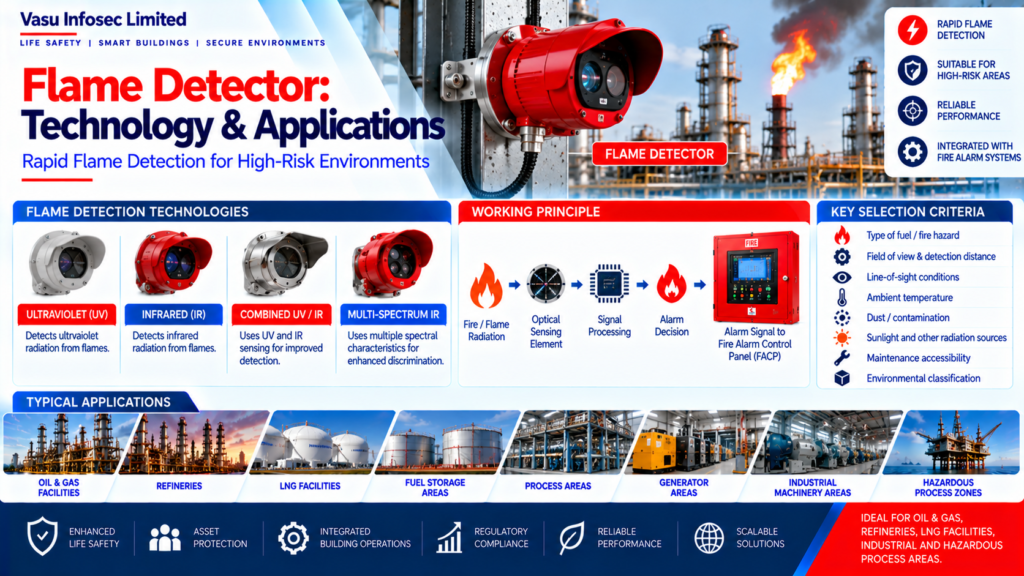
Fire / Flame Radiation → Optical Sensing Element → Signal Processing → Alarm Decision → Fire Alarm Control Panel → Notification & Cause / Effect Functions
3. Working Principle
A flame detector monitors selected portions of optical radiation generated by a flame. When the detected radiation and associated signal characteristics satisfy the programmed detection criteria, the detector generates an alarm output and communicates the condition to the Fire Alarm Control Panel.
4. Flame Detection Technologies
Flame detectors may use different optical sensing technologies depending on the approved equipment and application.
Typical technologies include:
- Ultraviolet (UV) detection
- Infrared (IR) detection
- Combined UV / IR detection
- Multi-spectrum infrared detection
5. UV Flame Detection
UV flame detectors respond to ultraviolet radiation associated with flames. They can provide rapid response to suitable flame signatures but require assessment of potential UV sources and environmental conditions that could influence detector performance.
6. IR Flame Detection
IR flame detectors respond to infrared radiation associated with flames. The detector evaluates the received radiation against its programmed criteria and initiates an alarm when the required conditions are satisfied.
7. Multi-Spectrum Flame Detection
Multi-spectrum flame detectors use more than one spectral characteristic to improve discrimination between genuine flame conditions and selected non-fire radiation sources. The actual detection algorithm and performance depend on the approved detector technology.
8. Application Selection Criteria
Selection should consider:
- Type of fuel / fire hazard
- Expected flame characteristics
- Required detection response
- Detector field of view
- Detection distance
- Line-of-sight conditions
- Ambient temperature
- Dust / contamination
- Sunlight and other radiation sources
- Maintenance accessibility
- Environmental classification
9. Industrial Applications
Flame detection may be suitable for hazards where rapid flame development is expected.
Potential applications include:
- Oil and gas facilities
- Refineries
- LNG facilities
- Fuel storage areas
- Process areas
- Generator areas
- Industrial machinery areas
- Hazardous process zones
10. Field of View & Coverage
Flame detector coverage depends on the detector’s approved field of view, detection characteristics, mounting position and the nature of the fire hazard. The layout should provide a clear line of sight to the protected hazard and avoid unnecessary obstructions.
11. Detector Location & Mounting
Detector mounting should follow the approved design and manufacturer requirements.
Engineering review should consider:
- Hazard location
- Detector elevation
- Field of view
- Structural obstructions
- Equipment movement
- Vibration
- Access for maintenance
- Physical protection
12. Environmental Considerations
Environmental conditions should be assessed before selecting and installing a flame detector.
Potential influences include:
- Direct sunlight
- Reflected radiation
- Welding activity
- Hot surfaces
- Dust
- Smoke
- Steam
- Rain / moisture for outdoor applications
- Temperature variation
13. Alarm & Fault Monitoring
The detector should communicate its alarm and applicable fault conditions to the Fire Alarm Control Panel in accordance with the selected system architecture. Addressable arrangements may provide individual device identification and additional status information.
14. Integration with Fire Alarm System
Integration should verify:
- Alarm signal transmission
- Device / zone identification
- Notification appliance operation
- Cause & Effect functions
- Fire suppression interfaces, where specified
- External monitoring interfaces
- Event recording
15. Testing & Commissioning
Testing should demonstrate correct flame detector operation and system integration.
Testing may include:
- Detector operational test using an approved test method
- Alarm signal verification
- Panel indication
- Device / zone identification
- Notification operation
- Cause & Effect testing
- Fault monitoring
- Reset and restoration
16. Inspection & Maintenance
Periodic inspection and maintenance should maintain detector sensitivity, field of view and physical condition.
Activities may include:
- Visual inspection
- Lens / optical surface cleaning where permitted
- Mounting inspection
- Alignment / field-of-view verification
- Functional testing
- Fault review
- Environmental condition review
17. Common Engineering Considerations
Engineering review should verify:
- Correct flame detection technology
- Suitable hazard application
- Required detection range
- Field of view
- Line-of-sight
- Environmental suitability
- False-alarm risk
- Fire alarm interface
- Maintenance access
- Documentation traceability
18. Documentation
Flame detector documentation should include, as applicable:
- Detector datasheet
- Detector schedule
- Approved layout drawings
- Field-of-view information
- Mounting details
- Detection zoning
- Cause & Effect Matrix
- Testing and commissioning records
- Maintenance records
- As-built documentation
19. Engineering Objective
The engineering objective is:
Correct Flame Detection Technology → Hazard-Suitable Selection → Clear Line of Sight → Reliable Optical Detection → Accurate Alarm / Fault Identification → Effective Fire Alarm Integration → Verified Testing → Maintainable Detection → Reliable Fire Safety Performance
Technology Comparison
The source identifies the following technologies. Actual performance, detection logic and application suitability depend on the approved detector model and manufacturer documentation.
| Technology | Operating concept (source-based) | Selection consideration |
| UV | Responds to ultraviolet radiation associated with flames. | Assess potential UV sources and environmental influences. |
| IR | Responds to infrared radiation and evaluates received radiation against programmed criteria. | Confirm suitability for the expected flame signature and environment. |
| Combined UV/IR | Combines UV and IR detection principles, depending on the approved device design. | Use the specific manufacturer’s application criteria. |
| Multi-spectrum IR | Uses multiple spectral characteristics to help discriminate flames from selected non-fire radiation sources. | Detection algorithm and performance are technology-specific. |
Frequently Asked Questions
What does a flame detector detect?
It detects selected optical radiation associated with flames and initiates an alarm when programmed detection criteria are met.
Where are flame detectors used?
Potential applications include oil and gas facilities, refineries, LNG facilities, fuel storage areas, process areas, generator areas, industrial machinery areas and hazardous process zones, subject to hazard assessment.
Why is line of sight important?
Coverage depends on field of view, mounting position and the fire hazard. Obstructions can prevent the detector from having a clear view of the protected hazard.
What can affect flame detector performance?
Potential influences include direct sunlight, reflected radiation, welding, hot surfaces, dust, smoke, steam, outdoor rain/moisture and temperature variation.
How should a flame detector be tested?
Testing should use an approved method and verify detector operation, alarm transmission, panel indication, device/zone identification, notification, cause-and-effect functions, fault monitoring and reset/restoration as applicable.
SEO and CMS Metadata Suggestions
| SEO title | Flame Detector Technology & Applications | Vasu Infosec |
| Meta description | Learn how flame detectors identify optical radiation, compare UV, IR and multi-spectrum technologies, and review key selection, coverage and integration considerations. |
| Suggested URL slug | /flame-detector-technology-applications/ |
| Primary keyword | flame detector technology |
| Related keywords | UV flame detector, IR flame detector, multi-spectrum flame detector, flame detector applications, flame detector field of view, industrial fire detection |
Pre-Publication Technical Review
- Confirm detector model-specific detection range, field of view, response characteristics and environmental limits against approved manufacturer documentation.
- Verify applicable standards, editions and clauses against the project specification and jurisdiction; none are asserted here as verified.
- Check that any project-specific installation, testing, suppression-interface or maintenance obligation is supported by the approved scope and contract.
- Use only approved product data, drawings and project references. Do not publish unsupported performance, certification or compliance claims.
Editorial note: This website-ready version is based on the supplied EA-010 source document. Model-specific technical values and applicable standards were not added where the source did not provide them.