
Article
Heat Detector: Types, Operation & Selection
Oct 2026
Direct Answer
A heat detector is an automatic fire detection device that responds to a defined temperature condition or a rapid rise in temperature. It is considered where smoke detection may be unsuitable or where the approved fire detection strategy calls for temperature-based detection. Selection depends on the fire characteristics, normal and fluctuating ambient temperatures, environment, required response, system architecture, manufacturer instructions and applicable standards.
1. Engineering Overview
A heat detector is an automatic fire detection device designed to respond to an increase in temperature or to a specified fixed temperature condition. Heat detectors are generally selected where smoke detection may be unsuitable due to the environment, or where the fire characteristics and approved detection strategy require temperature-based detection.
2. Heat Detection Architecture
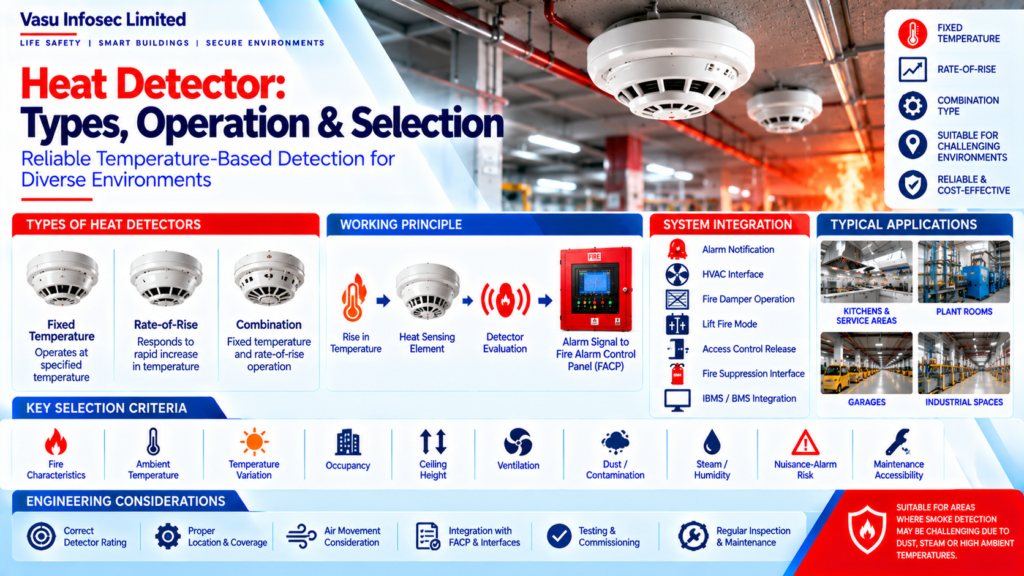
Fire-Related Temperature Rise → Heat Sensing Element → Detector Evaluation → Alarm Signal → Fire Alarm Control Panel → Notification & Cause / Effect Functions
3. Working Principle
A heat detector monitors the temperature at its sensing location. When the temperature reaches the detector’s defined operating condition, the device changes state and transmits an alarm signal to the Fire Alarm Control Panel.
4. Heat Detector Types
| Type | Operation / system characteristic |
| Fixed-temperature heat detector | A fixed-temperature detector operates when the surrounding temperature reaches its specified rated operating temperature. The selected temperature rating should be appropriate for the protected environment and design conditions. |
| Rate-of-rise heat detector | A rate-of-rise heat detector responds to a rapid increase in temperature. The detector evaluates the rate at which temperature changes and initiates an alarm when the applicable operating criteria are reached. |
| Combination heat detector | Combination heat detectors may incorporate more than one heat detection principle, such as fixed-temperature and rate-of-rise operation, depending on the approved device design. Selection should follow the manufacturer-approved application and project requirements. |
| Addressable heat detector | Addressable heat detectors are individually identified on an addressable fire alarm loop. The Fire Alarm Control Panel can associate the alarm or fault condition with the specific programmed device location. |
| Conventional heat detector | Conventional heat detectors are connected to a designated detection zone or circuit. When the detector operates, the Fire Alarm Control Panel identifies the affected zone. |
5. Heat Detector Selection Criteria
Selection should consider:
- Fire characteristics
- Ambient temperature
- Temperature variation
- Occupancy
- Ceiling height
- Ventilation
- Dust and contamination
- Steam or humidity
- Nuisance-alarm risk
- Required detection response
- Maintenance accessibility
6. Environmental Applications
Heat detectors may be suitable for environments where smoke detectors could experience nuisance alarms due to dust, steam, fumes or other non-fire conditions.
Potential applications may include:
- Kitchens and service areas
- Workshops
- Plant rooms
- Garages
- Industrial spaces
- Areas with elevated ambient conditions
7. Temperature Rating Considerations
The selected detector rating should be compatible with the normal ambient temperature of the protected area while maintaining the required fire detection response. Locations with elevated or fluctuating temperatures require specific assessment before final detector selection.
8. Detector Location
Detector locations should follow the approved fire alarm layout, manufacturer requirements and applicable standards.
Engineering review should consider:
- Ceiling configuration
- Obstructions
- Air movement
- Heat accumulation
- Equipment generating heat
- Access for maintenance
- Required coverage
9. Alarm & Fault Monitoring
The heat detector should communicate alarm and applicable fault or abnormal conditions to the Fire Alarm Control Panel in accordance with the selected system architecture. The panel should provide clear device or zone identification.
10. Integration with Fire Alarm System
Integration should verify:
- Alarm signal transmission
- Device / zone identification
- Notification appliance activation
- Cause & Effect operation
- External system interfaces
- Event recording
- Reset and restoration
11. Testing & Commissioning
Testing should demonstrate correct detector operation and system integration.
Testing may include:
- Functional heat detector test using an approved method
- Panel alarm indication
- Device / zone identification
- Notification operation
- Cause & Effect verification
- Fault monitoring
- Reset operation
12. Inspection & Maintenance
Heat detectors should be inspected and maintained in accordance with the approved maintenance programme and manufacturer requirements.
Activities may include:
- Visual inspection
- Functional testing
- Contamination assessment
- Physical condition check
- Wiring / communication verification
- Device replacement where required
13. Common Engineering Considerations
Engineering review should verify:
- Correct heat detector type
- Suitable temperature rating
- Environmental suitability
- Correct location and spacing
- Addressing / zoning
- Circuit compatibility
- Alarm response
- Maintenance accessibility
- Documentation traceability
14. Documentation
Heat detector documentation should include, as applicable:
- Detector datasheet
- Detector schedule
- Approved fire alarm drawings
- Temperature rating information
- Detection zoning
- Cause & Effect Matrix
- Testing and commissioning records
- Maintenance records
- As-built documentation
15. Engineering Objective
The engineering objective is:
Correct Heat Detection Principle → Suitable Temperature Rating → Hazard-Appropriate Selection → Reliable Temperature Sensing → Accurate Alarm Transmission → Effective Fire Alarm Integration → Verified Testing → Maintainable Detection → Reliable Fire Safety Performance
Frequently Asked Questions
What is a heat detector?
An automatic fire detection device that responds to a specified temperature condition or a rapid increase in temperature.
What is the difference between fixed-temperature and rate-of-rise heat detectors?
A fixed-temperature detector operates when its rated temperature condition is reached. A rate-of-rise detector responds to a rapid temperature increase according to its operating criteria.
When may a heat detector be considered instead of a smoke detector?
It may be considered where dust, steam, fumes or other non-fire conditions could cause nuisance alarms from smoke detection, or where the approved detection strategy requires temperature-based detection. Suitability must be assessed for the specific hazard and design.
How should the temperature rating be selected?
The rating should be compatible with normal ambient conditions while maintaining the required fire detection response. Elevated or fluctuating temperatures require specific assessment and manufacturer guidance.
What should be checked during commissioning?
As applicable, verify functional operation, panel indication, device or zone identification, notification, cause-and-effect functions, fault monitoring and reset/restoration using approved procedures.
SEO / CMS Metadata Suggestions
| SEO title | Heat Detector: Types, Operation & Selection | Vasu Infosec |
| Meta description | Learn how heat detectors work, compare fixed-temperature, rate-of-rise, combination, addressable and conventional types, and review selection, installation, testing and maintenance considerations. |
| Suggested URL slug | /heat-detector-types-operation-selection/ |
| Primary keyword | heat detector types and working principle |
| Related keywords | fixed-temperature heat detector; rate-of-rise heat detector; addressable heat detector; heat detector selection; fire alarm system |
| Suggested page excerpt | A practical engineering overview of heat detector operation, types, selection factors, integration, commissioning and maintenance. |
Technical Review & Pre-Publication Checklist
- Confirm detector types, device capabilities and application statements against the selected manufacturer datasheets and approved project design.
- Verify applicable standards, editions and clauses before publication; none are specifically identified in the source document.
- Do not add numerical temperature ratings, response thresholds, spacing values or performance claims unless supported by approved technical documentation.
- Confirm that examples of environmental applications are appropriate for the specific hazard and applicable design requirements.
- Keep testing, commissioning and maintenance activities subject to approved procedures, manufacturer instructions and the applicable contract scope.
- Ensure any project-specific claims, certifications, approvals or compliance statements are supported by documented evidence and authorised for publication.
Publication Note
This is a website-ready editorial version based on the supplied EA-009 source. Technical content has been retained and reorganised for readability, search discoverability and answer-oriented presentation. No specific standard, detector rating, spacing rule or compliance claim has been added because the source does not identify one. Obtain technical review before publication, especially for manufacturer-specific operating criteria and standards references.