
Article
Manual Call Point: Components & Operation
Oct 2026
Direct Answer
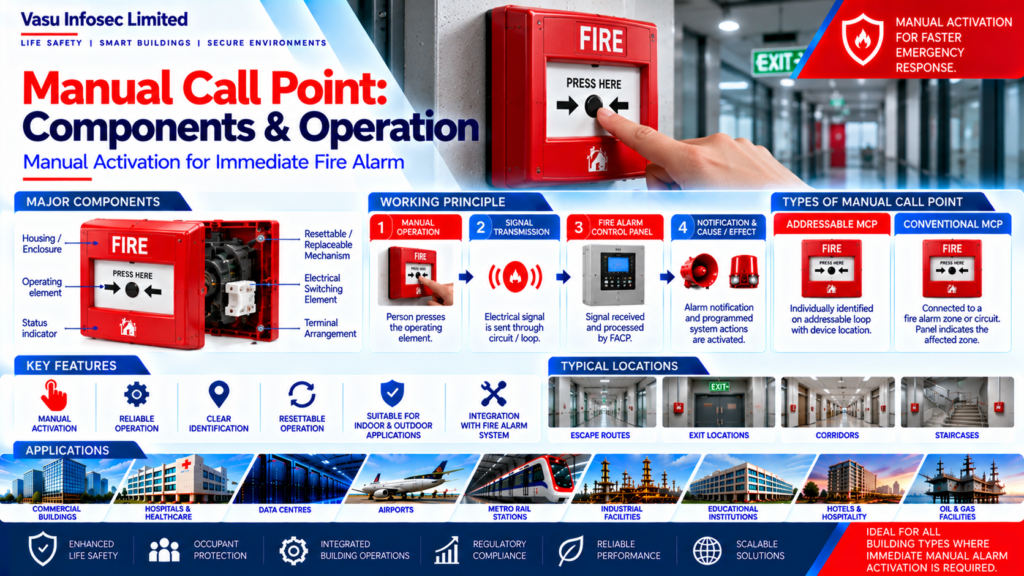
A Manual Call Point (MCP) is a manually operated fire alarm initiating device that allows a person to raise an alarm by direct action. When operated, its mechanism changes the device’s electrical state and sends an initiating signal through the applicable conventional circuit, addressable loop or interface to the Fire Alarm Control Panel (FACP). The panel then processes the alarm and initiates the programmed notification and cause-and-effect functions.
1. Engineering Overview
A Manual Call Point (MCP) is a manually operated fire alarm initiating device used to allow a person to raise a fire alarm by direct human action. It forms part of the fire alarm initiation layer and transmits an alarm signal to the Fire Alarm Control Panel through the applicable conventional circuit, addressable loop or interface.
2. Manual Call Point Architecture
Manual Operation → MCP Operating Mechanism → Electrical Contact / Addressable Interface → Fire Alarm Circuit / Loop → Fire Alarm Control Panel → Alarm Processing → Notification & Cause / Effect Functions
3. Working Principle
When a person operates the Manual Call Point, its internal operating mechanism changes the electrical state of the device. The resulting signal is transmitted to the Fire Alarm Control Panel, which identifies the alarm according to the system architecture and initiates the programmed response.
4. Major Components
A typical Manual Call Point may comprise:
- Operating element
- Resettable or replaceable operating mechanism, as applicable
- Electrical switching element
- Terminal arrangement
- Housing / enclosure
- Protective cover, where specified
- Status indicator, where provided
- Addressing or interface components for addressable systems
5. Addressable Manual Call Point
An addressable MCP is individually identified on the fire alarm loop. When operated, the Fire Alarm Control Panel can identify the specific programmed device and its location, subject to the approved system configuration.
6. Conventional Manual Call Point
A conventional MCP is connected to a designated fire alarm zone or circuit. When operated, the Fire Alarm Control Panel identifies the affected zone rather than necessarily identifying the individual device.
7. Operating Mechanism
The MCP operating mechanism should provide clear and deliberate manual activation. The selected device should comply with the approved design and manufacturer requirements regarding operation, resetting and accessibility.
8. Location & Installation
Manual Call Points should be located in accordance with the approved fire alarm layout, applicable requirements and emergency response strategy.
Engineering considerations include:
- Accessibility
- Visibility
- Escape routes
- Exit locations
- Mounting height
- Obstructions
- Physical protection
- Identification / signage
9. Indoor & Outdoor Applications
The MCP enclosure and protection rating should be suitable for the installation environment. Outdoor or exposed locations may require an appropriately rated weather-resistant device and enclosure in accordance with the approved specification.
10. Alarm Transmission
Upon operation, the MCP transmits an initiating signal to the Fire Alarm Control Panel through the connected circuit or addressable loop.
The system should provide:
- Reliable signal transmission
- Correct device / zone identification
- Alarm indication
- Event recording
- Notification activation
11. Cause & Effect Integration
Operation of an MCP may initiate programmed system actions through the approved Cause & Effect Matrix.
Typical actions may include:
- Sounder / hooter activation
- Strobe activation
- HVAC shutdown
- Lift fire mode
- Access control release
- Smoke control operation
- Fire suppression interface
- IBMS / BMS alarm transmission
12. Reset & Restoration
After the alarm condition has been investigated and the system is authorised for restoration, the MCP should be reset in accordance with the approved device procedure. The Fire Alarm Control Panel should subsequently confirm restoration of the initiating circuit / device.
13. Testing & Commissioning
Testing should demonstrate reliable MCP operation and correct integration with the Fire Alarm System.
Testing may include:
- Manual activation test
- Alarm indication at panel
- Device / zone identification
- Audible notification
- Visual notification
- Cause & Effect testing
- Event recording
- Reset operation
14. Inspection & Maintenance
MCPs should be periodically inspected and tested in accordance with the approved maintenance programme and manufacturer requirements.
Activities may include:
- Visual condition inspection
- Operating mechanism inspection
- Functional activation test
- Housing / cover inspection
- Terminal / wiring inspection
- Identification check
- Reset verification
15. Common Engineering Considerations
Engineering review should verify:
- Correct MCP type
- Suitable operating mechanism
- Appropriate location
- Mounting arrangement
- Environmental protection
- Circuit / loop compatibility
- Device identification
- Accessibility
- Cause & Effect integration
- Maintenance requirements
16. Documentation
MCP documentation should include, as applicable:
- MCP datasheet
- Device schedule
- Approved fire alarm layout
- Circuit / loop information
- Addressing information
- Cause & Effect Matrix
- Testing records
- Commissioning records
- Maintenance records
- As-built documentation
17. Applicable Standards & References
The applicable requirements should be determined from the approved project specifications, fire alarm design basis, applicable fire and life-safety standards, manufacturer requirements and Authority Having Jurisdiction requirements. The applicable edition and project-specific requirements should be verified before procurement and installation.
18. Engineering Objective
The engineering objective is:
Accessible Manual Initiation → Reliable MCP Operation → Accurate Alarm Transmission → Clear Device / Zone Identification → Effective Notification → Correct Cause & Effect → Verified Testing → Maintainable Device → Reliable Manual Fire Alarm Initiation
Frequently Asked Questions
What is the purpose of a Manual Call Point?
It allows a person to manually initiate a fire alarm by operating the device.
How does an MCP communicate with the fire alarm panel?
It transmits an initiating signal through the connected conventional circuit, addressable loop or interface, according to the system architecture.
What is the difference between addressable and conventional MCPs?
An addressable MCP can be individually identified by the panel, subject to system configuration. A conventional MCP typically identifies the affected zone or circuit.
Where should Manual Call Points be installed?
Locations should follow the approved fire alarm layout, applicable requirements and emergency response strategy. Consider accessibility, visibility, escape routes, exits, mounting height and obstructions.
What should be checked during MCP testing?
Testing may include manual activation, panel indication, device or zone identification, audible and visual notification, cause-and-effect operation, event recording and reset. The approved procedure and manufacturer instructions should govern the test.
Can an MCP initiate other building-system actions?
It may initiate programmed actions—such as HVAC shutdown, lift fire mode, access-control release or fire-suppression interfaces—only where these are included in the approved Cause & Effect Matrix and project scope.
SEO & CMS Metadata Suggestions
| SEO title | Manual Call Point: Components, Working & Installation | Vasu Infosec |
| Meta description | Learn how a Manual Call Point (MCP) works, its main components, addressable and conventional types, installation considerations, testing and fire alarm integration. |
| Suggested URL slug | /manual-call-point-components-operation/ |
| Primary keyword | Manual Call Point (MCP) |
| Related keywords | fire alarm manual call point; addressable MCP; conventional MCP; MCP testing; fire alarm initiating device |
| Suggested internal links | Fire Alarm System Architecture; Fire Alarm Control Panel; Fire Detection to Alarm Sequence; Addressable vs Conventional Fire Alarm Systems |
Pre-Publication Technical Review
- Confirm the applicable standards, editions, clauses and Authority Having Jurisdiction requirements from approved project specifications and design documents.
- Confirm manufacturer-specific MCP operating, reset and environmental-protection requirements before describing a particular product.
- Verify installation locations and mounting details against the approved fire alarm layout and applicable requirements; do not publish unsupported universal dimensions.
- Confirm all cause-and-effect interfaces and testing obligations against the approved Cause & Effect Matrix and contract scope.
- Ensure any Vasu Infosec Limited project-specific responsibilities stated on the website are supported by approved contractual or project records.