
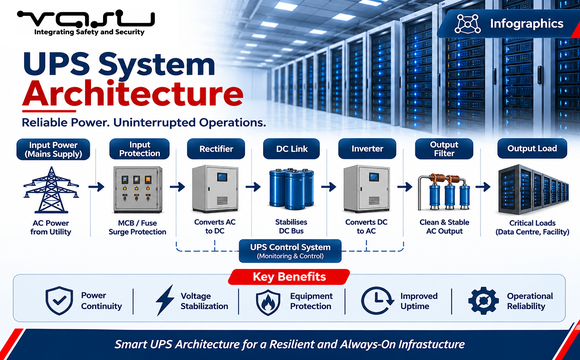
Infographic
UPS System Architecture – Components, Working & Power Distribution
Nov 2026
Introduction
A UPS (Uninterruptible Power Supply) System provides continuous and reliable power to critical equipment during utility power interruptions. It is an essential component of Data Centres, server rooms, hospitals and industrial facilities where uninterrupted power is required.
Main Components of UPS Architecture
- AC Input: Receives electrical power from the utility supply.
- Rectifier: Converts incoming AC power into DC power.
- Battery Bank: Stores electrical energy for backup operation.
- DC Link: Provides a common DC power connection.
- Inverter: Converts DC power back into regulated AC power.
- Output Distribution: Supplies protected power to critical equipment.
- Static Bypass: Provides an alternative power path during UPS faults or maintenance, as designed.
Working Principle
During normal operation, the rectifier converts AC power into DC, supplying the inverter and charging the battery bank. The inverter delivers regulated AC power to critical loads.
During a utility power failure, the battery bank supplies DC power to the inverter, maintaining the output supply without interruption within the specified backup capacity.
Applications
UPS systems are widely used in:
- Data Centres and Server Rooms.
- Hospitals and Healthcare Facilities.
- Airports and Metro Rail Infrastructure.
- Industrial Automation Systems.
- Communication and Network Facilities.
Conclusion
A properly designed UPS architecture ensures power continuity, equipment protection and operational reliability. Correct UPS capacity selection, battery sizing, redundancy and maintenance are essential for critical infrastructure.
VASU Infosec Limited supports integrated safety and security solutions for Data Centres and critical infrastructure.