
Standard / Code
High Pressure Water Mist Fire Suppression System
Nov 2026
Introduction
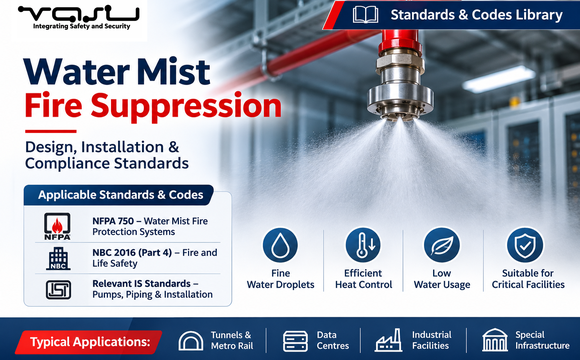
High Pressure Water Mist (HPWM) Fire Suppression Systems are designed to control and suppress fire using finely atomised water droplets discharged at high pressure. The system provides effective fire protection through heat absorption, cooling and reduction of radiant heat transfer.
HPWM systems are suitable for selected applications such as metro railway tunnels, industrial facilities, machinery spaces and critical infrastructure, subject to hazard assessment and system approval.
Applicable Standards & Codes
- NFPA 750: Standard on Water Mist Fire Protection Systems.
- NBC 2016 Part 4: Fire and Life Safety.
- Applicable BIS Standards: As specified by the project and relevant authority.
- Manufacturer Guidelines: Approved system design, installation and testing requirements.
Key Engineering Considerations
The design and installation of an HPWM system should consider:
- Fire hazard classification and risk assessment.
- Operating pressure and water supply requirements.
- Nozzle selection, spacing and discharge characteristics.
- Hydraulic calculations and pipe network design.
- Pump capacity and system configuration.
- System activation and control arrangements.
- Inspection, testing and commissioning.
Applications
High Pressure Water Mist Systems are used in selected applications including:
- Metro and railway tunnels.
- Industrial and process facilities.
- Machinery and equipment protection.
- Enclosed infrastructure areas.
- Special hazard environments.
Conclusion
Proper engineering design, compliance with applicable standards and systematic testing are essential for reliable Water Mist Fire Suppression System performance. Project-specific hazard assessment and approval requirements should always be considered before installation.
VASU Infosec Limited provides Fire & Life Safety engineering solutions, including system design, supply, installation, testing and commissioning for critical infrastructure.