
Article
Emergency Voice Evacuation System
Nov 2026
1. Engineering Overview
An emergency voice evacuation system communicates emergency instructions to occupants through designated loudspeakers and control equipment. Its design must align with the building evacuation strategy, alarm zoning, occupancy profile and operational procedures. The design review should confirm the requirement, system boundary, governing inputs, interfaces and evidence supporting the proposed arrangement. The selected solution should remain consistent with the approved design intent and the manufacturer’s verified application data. Where the project basis does not define a criterion, the gap should be referred to the responsible engineer rather than resolved through an unsupported assumption.
2. Complete Emergency Voice Evacuation Architecture
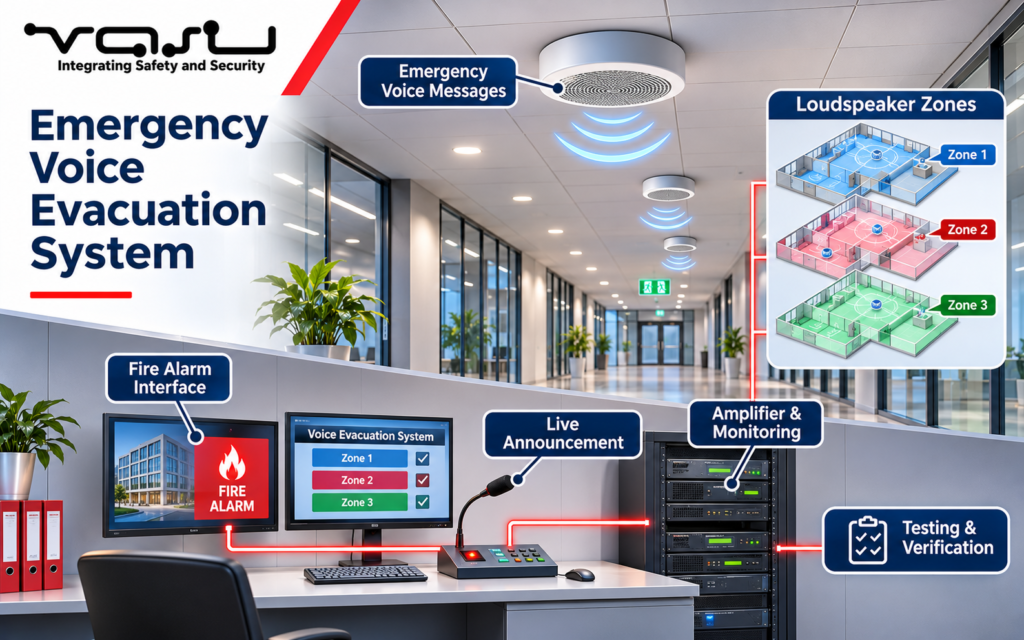
The arrangement may include a control and indication facility, message source, amplifiers, loudspeaker circuits, zone selection, power supplies, monitoring and interfaces with fire detection and alarm systems. The design review should confirm the requirement, system boundary, governing inputs, interfaces and evidence supporting the proposed arrangement. The selected solution should remain consistent with the approved design intent and the manufacturer’s verified application data. Where the project basis does not define a criterion, the gap should be referred to the responsible engineer rather than resolved through an unsupported assumption.
3. Design Philosophy
Establish building use, floor and compartment layout, evacuation strategy, ambient conditions, acoustic constraints, occupant needs and required coverage zones. Define zone boundaries and message priorities from the approved strategy. The design review should confirm the requirement, system boundary, governing inputs, interfaces and evidence supporting the proposed arrangement. The selected solution should remain consistent with the approved design intent and the manufacturer’s verified application data. Where the project basis does not define a criterion, the gap should be referred to the responsible engineer rather than resolved through an unsupported assumption.
4. Evacuation Strategy & Message Philosophy
Assess loudspeaker distribution, acoustic environment, background noise, reverberation and audibility/intelligibility criteria specified for the project. Equipment quantity and spacing must be supported by design calculations or survey evidence. The design review should confirm the requirement, system boundary, governing inputs, interfaces and evidence supporting the proposed arrangement. The selected solution should remain consistent with the approved design intent and the manufacturer’s verified application data. Where the project basis does not define a criterion, the gap should be referred to the responsible engineer rather than resolved through an unsupported assumption.
5. Building Zoning
Prepare approved messages and define priority, override, live announcement and automatic message behaviour. Wording, languages and operational control must be agreed with the responsible stakeholders. The design review should confirm the requirement, system boundary, governing inputs, interfaces and evidence supporting the proposed arrangement. The selected solution should remain consistent with the approved design intent and the manufacturer’s verified application data. Where the project basis does not define a criterion, the gap should be referred to the responsible engineer rather than resolved through an unsupported assumption.
6. Loudspeaker Coverage
Document primary and standby power, circuit supervision, fault indication, routing and resilience requirements. Verify that the system architecture supports the specified emergency operating duration and failure response. The design review should confirm the requirement, system boundary, governing inputs, interfaces and evidence supporting the proposed arrangement. The selected solution should remain consistent with the approved design intent and the manufacturer’s verified application data. Where the project basis does not define a criterion, the gap should be referred to the responsible engineer rather than resolved through an unsupported assumption.
7. Acoustic Environment
Coordinate triggering and control with fire alarm zones, phased evacuation logic, smoke control and other emergency systems. Maintain a traceable cause-and-effect matrix and define manual intervention permissions. The design review should confirm the requirement, system boundary, governing inputs, interfaces and evidence supporting the proposed arrangement. The selected solution should remain consistent with the approved design intent and the manufacturer’s verified application data. Where the project basis does not define a criterion, the gap should be referred to the responsible engineer rather than resolved through an unsupported assumption.
8. Speech Intelligibility
Coordinate loudspeaker locations with ceilings, lighting, sprinklers, detectors, signage and architectural finishes. Ensure cable routes, circuit segregation and access meet the approved design and installation requirements. The design review should confirm the requirement, system boundary, governing inputs, interfaces and evidence supporting the proposed arrangement. The selected solution should remain consistent with the approved design intent and the manufacturer’s verified application data. Where the project basis does not define a criterion, the gap should be referred to the responsible engineer rather than resolved through an unsupported assumption.
9. Ambient Noise Assessment
Verify zone operation, message clarity, intelligibility where required, circuit monitoring, fault reporting, standby operation and interface sequences. Retain test methodology and results. The design review should confirm the requirement, system boundary, governing inputs, interfaces and evidence supporting the proposed arrangement. The selected solution should remain consistent with the approved design intent and the manufacturer’s verified application data. Where the project basis does not define a criterion, the gap should be referred to the responsible engineer rather than resolved through an unsupported assumption.
10. Loudspeaker Selection
This illustrative article does not establish project-specific intelligibility targets, sound levels, standby duration, message wording or statutory compliance. These must be set by the approved design basis. The design review should confirm the requirement, system boundary, governing inputs, interfaces and evidence supporting the proposed arrangement. The selected solution should remain consistent with the approved design intent and the manufacturer’s verified application data. Where the project basis does not define a criterion, the gap should be referred to the responsible engineer rather than resolved through an unsupported assumption.
11. Loudspeaker Circuit Design
An emergency voice evacuation system communicates emergency instructions to occupants through designated loudspeakers and control equipment. Its design must align with the building evacuation strategy, alarm zoning, occupancy profile and operational procedures. The design review should confirm the requirement, system boundary, governing inputs, interfaces and evidence supporting the proposed arrangement. The selected solution should remain consistent with the approved design intent and the manufacturer’s verified application data. Where the project basis does not define a criterion, the gap should be referred to the responsible engineer rather than resolved through an unsupported assumption.
12. Amplifier & Control Equipment
The arrangement may include a control and indication facility, message source, amplifiers, loudspeaker circuits, zone selection, power supplies, monitoring and interfaces with fire detection and alarm systems. The interface definition should identify the initiating condition, command or response, feedback indication, responsible system, power dependency and failure behaviour. Signal names and equipment identifiers should remain consistent across drawings, schedules, software configuration and commissioning records. The final operating sequence should be approved by the responsible design and operations stakeholders.
13. Message Storage & Playback
Establish building use, floor and compartment layout, evacuation strategy, ambient conditions, acoustic constraints, occupant needs and required coverage zones. Define zone boundaries and message priorities from the approved strategy. The design review should confirm the requirement, system boundary, governing inputs, interfaces and evidence supporting the proposed arrangement. The selected solution should remain consistent with the approved design intent and the manufacturer’s verified application data. Where the project basis does not define a criterion, the gap should be referred to the responsible engineer rather than resolved through an unsupported assumption.
14. Live Announcement Facilities
Assess loudspeaker distribution, acoustic environment, background noise, reverberation and audibility/intelligibility criteria specified for the project. Equipment quantity and spacing must be supported by design calculations or survey evidence. The design review should confirm the requirement, system boundary, governing inputs, interfaces and evidence supporting the proposed arrangement. The selected solution should remain consistent with the approved design intent and the manufacturer’s verified application data. Where the project basis does not define a criterion, the gap should be referred to the responsible engineer rather than resolved through an unsupported assumption.
15. Message Priority & Override
Prepare approved messages and define priority, override, live announcement and automatic message behaviour. Wording, languages and operational control must be agreed with the responsible stakeholders. The design review should confirm the requirement, system boundary, governing inputs, interfaces and evidence supporting the proposed arrangement. The selected solution should remain consistent with the approved design intent and the manufacturer’s verified application data. Where the project basis does not define a criterion, the gap should be referred to the responsible engineer rather than resolved through an unsupported assumption.
16. Fire Alarm Interface
Document primary and standby power, circuit supervision, fault indication, routing and resilience requirements. Verify that the system architecture supports the specified emergency operating duration and failure response. The interface definition should identify the initiating condition, command or response, feedback indication, responsible system, power dependency and failure behaviour. Signal names and equipment identifiers should remain consistent across drawings, schedules, software configuration and commissioning records. The final operating sequence should be approved by the responsible design and operations stakeholders.
17. Automatic Evacuation Sequence
Coordinate triggering and control with fire alarm zones, phased evacuation logic, smoke control and other emergency systems. Maintain a traceable cause-and-effect matrix and define manual intervention permissions. The interface definition should identify the initiating condition, command or response, feedback indication, responsible system, power dependency and failure behaviour. Signal names and equipment identifiers should remain consistent across drawings, schedules, software configuration and commissioning records. The final operating sequence should be approved by the responsible design and operations stakeholders.
18. Manual Zone Selection
Coordinate loudspeaker locations with ceilings, lighting, sprinklers, detectors, signage and architectural finishes. Ensure cable routes, circuit segregation and access meet the approved design and installation requirements. The design review should confirm the requirement, system boundary, governing inputs, interfaces and evidence supporting the proposed arrangement. The selected solution should remain consistent with the approved design intent and the manufacturer’s verified application data. Where the project basis does not define a criterion, the gap should be referred to the responsible engineer rather than resolved through an unsupported assumption.
19. Power Supply & Standby Operation
Verify zone operation, message clarity, intelligibility where required, circuit monitoring, fault reporting, standby operation and interface sequences. Retain test methodology and results. The interface definition should identify the initiating condition, command or response, feedback indication, responsible system, power dependency and failure behaviour. Signal names and equipment identifiers should remain consistent across drawings, schedules, software configuration and commissioning records. The final operating sequence should be approved by the responsible design and operations stakeholders.
20. Circuit Monitoring & Fault Indication
This illustrative article does not establish project-specific intelligibility targets, sound levels, standby duration, message wording or statutory compliance. These must be set by the approved design basis. The interface definition should identify the initiating condition, command or response, feedback indication, responsible system, power dependency and failure behaviour. Signal names and equipment identifiers should remain consistent across drawings, schedules, software configuration and commissioning records. The final operating sequence should be approved by the responsible design and operations stakeholders.
21. Cable Routing & Installation
An emergency voice evacuation system communicates emergency instructions to occupants through designated loudspeakers and control equipment. Its design must align with the building evacuation strategy, alarm zoning, occupancy profile and operational procedures. The arrangement should be coordinated with adjacent disciplines, physical constraints, access requirements and the approved installation details. Maintain traceability between installed equipment, asset identifiers, drawings, schedules and inspection records. Any inaccessible, incomplete or modified item should be recorded with its operational implication and assigned close-out action.
22. Coordination with Other Services
The arrangement may include a control and indication facility, message source, amplifiers, loudspeaker circuits, zone selection, power supplies, monitoring and interfaces with fire detection and alarm systems. The arrangement should be coordinated with adjacent disciplines, physical constraints, access requirements and the approved installation details. Maintain traceability between installed equipment, asset identifiers, drawings, schedules and inspection records. Any inaccessible, incomplete or modified item should be recorded with its operational implication and assigned close-out action.
23. Accessibility & Occupant Communication
Establish building use, floor and compartment layout, evacuation strategy, ambient conditions, acoustic constraints, occupant needs and required coverage zones. Define zone boundaries and message priorities from the approved strategy. The arrangement should be coordinated with adjacent disciplines, physical constraints, access requirements and the approved installation details. Maintain traceability between installed equipment, asset identifiers, drawings, schedules and inspection records. Any inaccessible, incomplete or modified item should be recorded with its operational implication and assigned close-out action.
24. Testing & Commissioning
Assess loudspeaker distribution, acoustic environment, background noise, reverberation and audibility/intelligibility criteria specified for the project. Equipment quantity and spacing must be supported by design calculations or survey evidence. Verification should be planned against approved drawings, schedules, control narratives and acceptance criteria. Record the equipment or location reference, test condition, instrument where relevant, observed response, result, defect and close-out status. Any deviation should be resolved through the project quality and change-control process before the relevant system is accepted.
25. Intelligibility Verification
Prepare approved messages and define priority, override, live announcement and automatic message behaviour. Wording, languages and operational control must be agreed with the responsible stakeholders. Verification should be planned against approved drawings, schedules, control narratives and acceptance criteria. Record the equipment or location reference, test condition, instrument where relevant, observed response, result, defect and close-out status. Any deviation should be resolved through the project quality and change-control process before the relevant system is accepted.
26. Integrated Cause-and-Effect Testing
Document primary and standby power, circuit supervision, fault indication, routing and resilience requirements. Verify that the system architecture supports the specified emergency operating duration and failure response. Verification should be planned against approved drawings, schedules, control narratives and acceptance criteria. Record the equipment or location reference, test condition, instrument where relevant, observed response, result, defect and close-out status. Any deviation should be resolved through the project quality and change-control process before the relevant system is accepted.
27. Failure & Recovery
Coordinate triggering and control with fire alarm zones, phased evacuation logic, smoke control and other emergency systems. Maintain a traceable cause-and-effect matrix and define manual intervention permissions. The design review should confirm the requirement, system boundary, governing inputs, interfaces and evidence supporting the proposed arrangement. The selected solution should remain consistent with the approved design intent and the manufacturer’s verified application data. Where the project basis does not define a criterion, the gap should be referred to the responsible engineer rather than resolved through an unsupported assumption.
28. Maintenance & Inspection
Coordinate loudspeaker locations with ceilings, lighting, sprinklers, detectors, signage and architectural finishes. Ensure cable routes, circuit segregation and access meet the approved design and installation requirements. Verification should be planned against approved drawings, schedules, control narratives and acceptance criteria. Record the equipment or location reference, test condition, instrument where relevant, observed response, result, defect and close-out status. Any deviation should be resolved through the project quality and change-control process before the relevant system is accepted.
29. Documentation & Handover
Verify zone operation, message clarity, intelligibility where required, circuit monitoring, fault reporting, standby operation and interface sequences. Retain test methodology and results. The arrangement should be coordinated with adjacent disciplines, physical constraints, access requirements and the approved installation details. Maintain traceability between installed equipment, asset identifiers, drawings, schedules and inspection records. Any inaccessible, incomplete or modified item should be recorded with its operational implication and assigned close-out action.
30. Engineering Objective
This illustrative article does not establish project-specific intelligibility targets, sound levels, standby duration, message wording or statutory compliance. These must be set by the approved design basis. The design review should confirm the requirement, system boundary, governing inputs, interfaces and evidence supporting the proposed arrangement. The selected solution should remain consistent with the approved design intent and the manufacturer’s verified application data. Where the project basis does not define a criterion, the gap should be referred to the responsible engineer rather than resolved through an unsupported assumption.
Frequently Asked Questions
What is the purpose of Emergency Voice Evacuation System?
An emergency voice evacuation system communicates emergency instructions to occupants through designated loudspeakers and control equipment. Its design must align with the building evacuation strategy, alarm zoning, occupancy profile and operational procedures.
What is the high-level process or architecture covered in Emergency Voice Evacuation System?
Fire Strategy → Design / Operational Requirements → System Boundary & Interface Identification → Equipment / Procedure Definition → Coordinated Design → Installation / Implementation → Inspection → Functional & Integrated Verification → Documentation → Handover / Review
What information should be confirmed before implementation?
Confirm the approved design basis, project inputs, operating conditions, coordinated drawings, interface requirements, manufacturer information and applicable acceptance criteria. Any missing or ambiguous input should be referred to the responsible project engineer.
Does this article establish project compliance or a final design?
No. This is an illustrative engineering knowledge article, not a verified project record, design approval or compliance certificate. Project-specific requirements and technical decisions must be independently verified.