
Article
Hazard Classification for Sprinkler Design
Oct 2026
Direct Answer
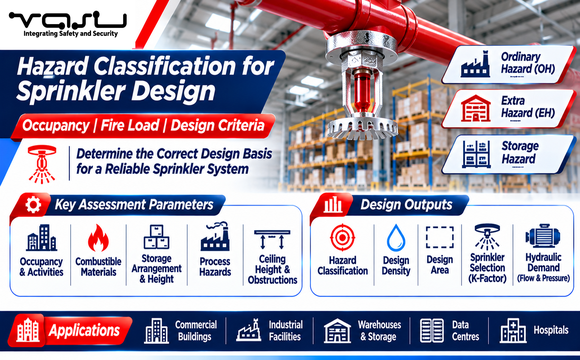
Hazard classification establishes the fire protection design basis for an automatic sprinkler system by assessing occupancy, combustible materials, storage and process conditions, building configuration, and special fire risks. The resulting classification informs sprinkler density, design area, sprinkler selection, hydraulic demand, and water-supply verification. Final criteria should follow the approved project design basis and applicable requirements.
1. Engineering Overview
Hazard Classification is the process of determining the appropriate fire protection design basis for an automatic sprinkler system by evaluating the occupancy, combustible materials, fire load, storage arrangement and other characteristics of the protected area. The classification directly influences sprinkler density, design area, sprinkler selection, water demand and hydraulic design.
2. Classification Architecture
Occupancy Assessment → Combustible Load → Fire Characteristics → Storage / Process Conditions → Hazard Classification → Design Density → Design Area → Sprinkler Selection → Hydraulic Calculation → Water Supply Verification
3. Design Inputs
Hazard classification should consider:
- Building occupancy
- Nature of activities
- Combustible materials
- Fire load
- Storage arrangement
- Storage height
- Process hazards
- Ceiling height
- Environmental conditions
- Special fire risks
4. Occupancy Assessment
The use and function of each protected area should be established before assigning a sprinkler hazard classification. Different areas within the same facility may require different design criteria depending on their actual occupancy and fire risk.
5. Combustible Load
The quantity, type and arrangement of combustible materials influence fire development and sprinkler demand. Combustible packaging, furnishings, stored goods, process materials and other fire loads should be evaluated as part of the design assessment.
6. Storage Considerations
Storage configuration should be assessed for commodity type, storage height, rack arrangement, aisle configuration and ceiling conditions. Storage hazards may require specialised sprinkler arrangements and hydraulic design criteria.
7. Process Hazards
Industrial processes may introduce additional fire risks through flammable materials, hot processes, machinery, combustible dust, liquids or other specialised hazards. Such conditions should be identified during the hazard assessment.
8. Ceiling & Building Configuration
Ceiling height, construction, obstructions and building geometry can influence sprinkler selection, spacing and hydraulic performance. These characteristics should be incorporated into the approved design.
9. Hazard Classification & Design Density
The selected hazard classification establishes the applicable design density and other sprinkler design parameters. The density should be appropriate for the anticipated fire severity and protected occupancy.
10. Hazard Classification & Design Area
Design area selection should be coordinated with the applicable hazard classification. The hydraulic design area should represent the approved critical operating condition for the protected hazard.
11. Sprinkler Selection Coordination
Sprinkler type, K-factor, temperature rating, orientation and coverage should be selected based on the hazard classification and approved design requirements. Special applications may require specifically listed or approved sprinkler types.
12. Hydraulic Demand
Hazard classification directly affects the required hydraulic demand. The calculation should establish sprinkler flow, total design flow, pressure requirement and the associated pump / water supply duty.
13. Multiple Hazard Areas
A facility may contain areas with different hazards. Each zone should be assessed independently where required, and the fire protection system should be designed for the applicable critical operating condition.
14. Special Risk Areas
Areas containing unusual or high-risk fire hazards should receive specific engineering assessment rather than being classified solely by general occupancy. The final protection strategy should be documented in the approved design basis.
15. Classification Review
Hazard classification should be reviewed whenever there is a change in occupancy, process, storage arrangement, combustible load, ceiling configuration or other condition that can affect fire severity.
16. Installation Coordination
Installation should verify that the actual protected conditions remain consistent with the approved hazard classification.
Verify:
- Occupancy use
- Storage arrangement
- Storage height
- Sprinkler type
- Sprinkler spacing
- Design area
- Pipe arrangement
- Approved design density
17. Testing & Commissioning
Testing and commissioning should confirm that the installed sprinkler system corresponds with the approved hazard classification and hydraulic design. Any significant deviation should be reviewed before final acceptance.
18. Design Change Control
Changes to occupancy, process, storage, combustible materials, ceiling height, sprinkler arrangement or system configuration should trigger a hazard classification review before implementation.
19. Documentation
Hazard classification documentation should include, as applicable:
- Design basis
- Occupancy assessment
- Hazard classification schedule
- Storage / process information
- Design density
- Design area
- Sprinkler schedule
- Hydraulic calculation
- Approved layouts
- Design review records
- Testing and commissioning records
20. Engineering Objective
The engineering objective is:
Accurate Occupancy Assessment → Fire Risk Evaluation → Correct Hazard Classification → Appropriate Density & Design Area → Correct Sprinkler Selection → Hydraulic Verification → Adequate Water Supply → Controlled Installation → Periodic Review → Reliable Fire Protection
Frequently Asked Questions
What is hazard classification in sprinkler design?
It is the assessment of occupancy, combustible materials, storage, process and building conditions used to establish the appropriate sprinkler design basis.
Why does hazard classification matter?
It influences design density, hydraulic design area, sprinkler selection, total water demand, and the required pump and water-supply duty.
Can one facility have multiple hazard classifications?
Yes. Different areas may have different occupancy and fire risks, so each zone should be assessed independently where required.
What information is needed for a hazard assessment?
Relevant information includes occupancy, activities, combustible load, storage type and height, process hazards, ceiling configuration, environmental conditions and special risks.
When should hazard classification be reviewed?
Review it when occupancy, process, storage, combustible materials, ceiling height, sprinkler arrangement or system configuration changes.
What records should be maintained?
As applicable, retain the design basis, occupancy assessment, classification schedule, storage/process information, density and design area, sprinkler schedule, hydraulic calculations, approved layouts, review records and commissioning records.