
Comparison Guide
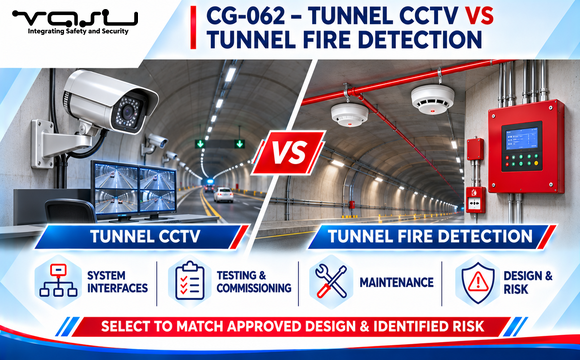
Tunnel CCTV vs Tunnel Fire Detection
Nov 2026
Direct Answer
Tunnel CCTV vs Tunnel Fire Detection should be evaluated against the approved project design basis and identified risk. The supplied source provides a high-level comparison framework but does not establish a universal preferred option or provide detailed comparative performance data. Final selection requires project-specific technical evidence and documented requirements.
At a Glance
| Comparison topic | Tunnel CCTV vs Tunnel Fire Detection |
| Decision basis | Approved risk assessment and project design basis |
| Key review factors | Application, performance, compatibility, environment and interfaces |
| Verification required | OEM documentation, project specification and applicable requirements |
| Source detail level | High-level framework; detailed comparative data not supplied |
Technical Content
1. Engineering Overview
Tunnel CCTV and Tunnel Fire Detection address related engineering requirements but differ in application, architecture, performance, interfaces and lifecycle considerations. The comparison should be evaluated against the approved project design basis and identified risk.
2. Technical Comparison
| Comparison Parameter | Tunnel CCTV | Tunnel Fire Detection |
| Primary Purpose | Applied where tunnel cctv meets the identified project requirement. | Applied where tunnel fire detection meets the identified project requirement. |
| Typical Application | Selected according to hazard, occupancy, environment and performance requirements. | Selected according to hazard, occupancy, environment and performance requirements. |
| Architecture | Equipment / devices → control / processing → outputs → monitoring. | Equipment / devices → control / processing → outputs → monitoring. |
| Key Design Factors | Coverage, capacity, compatibility, reliability, environmental suitability and maintainability. | Coverage, capacity, compatibility, reliability, environmental suitability and maintainability. |
| System Interfaces | Coordinate with applicable fire alarm, BMS / IBMS, CCTV, access control, power and emergency systems. | Coordinate with applicable fire alarm, BMS / IBMS, CCTV, access control, power and emergency systems. |
| Testing & Commissioning | Verify installation, functionality, alarms / controls, interfaces, fault monitoring and approved sequences. | Verify installation, functionality, alarms / controls, interfaces, fault monitoring and approved sequences. |
| Maintenance | Inspection, functional testing, defect correction, records and impairment control. | Inspection, functional testing, defect correction, records and impairment control. |
| Engineering Selection | Select when documented performance and project requirements best match the identified risk. | Select when documented performance and project requirements best match the identified risk. |
3. Key Engineering Differences
Tunnel CCTV: Evaluate its operating principle, coverage, installation requirements, interfaces and limitations within the approved design.
Tunnel Fire Detection: Evaluate its operating principle, coverage, installation requirements, interfaces and limitations within the approved design.
4. Testing & Commissioning
Verify equipment installation, identification, functionality, alarm/control response, cause-and-effect, interfaces, fault conditions, emergency power and representative integrated scenarios.
5. Maintenance & Reliability
Establish planned inspection, functional testing, calibration where applicable, defect management, records and impairment controls in accordance with the approved maintenance philosophy and manufacturer requirements.
6. Engineering Decision Guide
Select Tunnel CCTV when its documented technical performance and application requirements provide the appropriate solution for the identified hazard.
Select Tunnel Fire Detection when its documented technical performance and application requirements provide the appropriate solution for the identified hazard.
7. Final Engineering Note
Final selection should be based on the approved risk assessment, design basis, project specification, applicable codes and standards, authority requirements, manufacturer requirements and lifecycle considerations.
Frequently Asked Questions
Is one option always better?
No universal preference is established by the source guide. Compare Tunnel CCTV vs Tunnel Fire Detection against the hazard, approved design basis and documented project requirements.
What should be reviewed before selection?
Review the approved risk assessment, design basis, project specification, applicable codes and standards, authority requirements, manufacturer requirements and lifecycle considerations.
What should testing and commissioning verify?
The source calls for checking installation, identification, functionality, alarm/control response, cause-and-effect, interfaces, fault conditions, emergency power and representative integrated scenarios.
What should maintenance include?
Planned inspection, functional testing, calibration where applicable, defect management, records and impairment controls should follow the approved maintenance philosophy and manufacturer requirements.