
Engineering Calculation
CCTV Camera Pixel Density Calculation
Nov 2026
Direct Answer
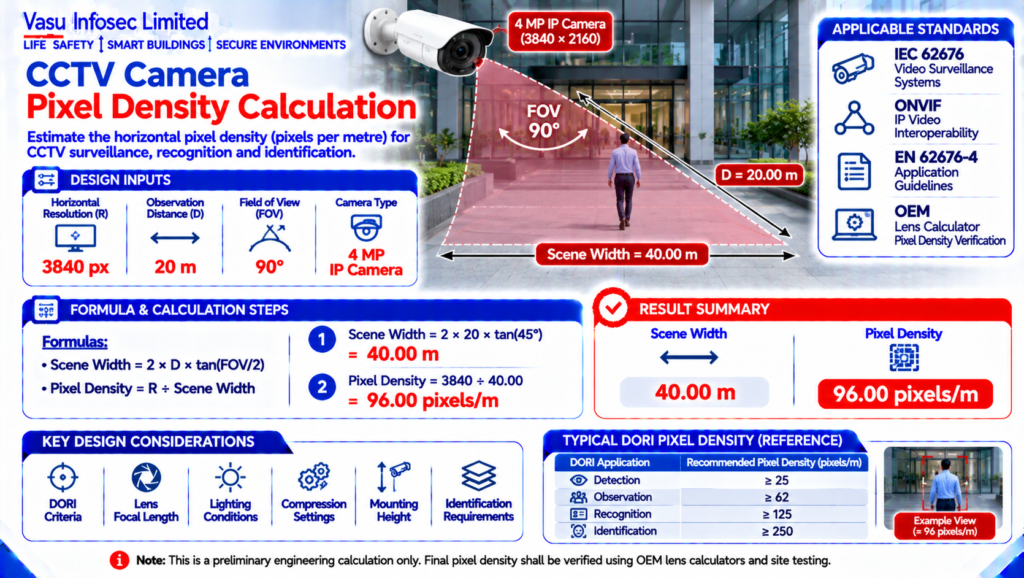
CCTV camera pixel density is estimated from the camera resolution and scene width. In this example, the camera provides approximately 96.00 pixels per metre. Final verification should be completed using the OEM lens calculator and field validation.
At a Glance
| Resource ID | EC-080 |
| Horizontal Resolution | R | 3840 | Pixels |
| Observation Distance | D | 20 | m |
| Horizontal Field of View | FOV | 90 | deg |
| Camera Type | 4 MP IP Camera | – |
| Source detail | Refer to Technical Content |
| Source detail | Refer to Technical Content |
| Source detail | Refer to Technical Content |
Calculation Method & Worked Example
Scene Width = 2 × Distance × tan(FOV/2)
Pixel Density = Horizontal Resolution ÷ Scene Width
Scene Width = 2 × 20 × tan(45.0°) = 40.00 m
Pixel Density = 3840 ÷ 40.00 = 96.00 pixels/m
Preliminary calculation based on source inputs and assumptions.
Applicable Standards Listed in the Source
| IEC 62676 | Video Surveillance Systems |
| ONVIF | IP Video Interoperability |
| EN 62676-4 | Application Guidelines |
| OEM Lens Calculator | Pixel density verification |
Technical Content
1. Purpose
To estimate the pixel density achieved by a CCTV camera across the monitored scene for surveillance, observation, recognition and identification applications.
2. Engineering Objective
To calculate the preliminary horizontal pixel density (pixels per metre) to verify that the selected camera and lens satisfy project surveillance requirements. Final verification shall be completed using OEM lens calculators and site validation.
3. Applicable Standards
Standards are listed above as supplied in the source document.
4. Design Inputs
Horizontal Resolution = R = 3840 = Pixels; Observation Distance = D = 20 = m; Horizontal Field of View = FOV = 90 = deg; Camera Type = 4 MP IP Camera = –
5. Assumptions
Flat terrain and unobstructed view are assumed. Pixel density is calculated across the horizontal scene width only.
6. Formula(s)
Scene Width = 2 × Distance × tan(FOV/2)
Pixel Density = Horizontal Resolution ÷ Scene Width
Scene Width = 2 × Distance × tan(FOV/2)
Pixel Density = Horizontal Resolution ÷ Scene Width
Scene Width: 40.00 m
Pixel Density: 96.00 pixels/m
7. Variables Explained
R = Horizontal resolution (pixels); D = Observation distance (m); FOV = Horizontal field of view.
8. Step-by-Step Calculation
Scene Width = 2 × 20 × tan(45.0°) = 40.00 m
Pixel Density = 3840 ÷ 40.00 = 96.00 pixels/m
Scene Width = 2 × 20 × tan(45.0°) = 40.00 m
Pixel Density = 3840 ÷ 40.00 = 96.00 pixels/m
Scene Width: 40.00 m
Pixel Density: 96.00 pixels/m
9. Worked Engineering Example
A camera with 3840-pixel horizontal resolution monitoring 20 m using a 90° field of view provides approximately 96.00 pixels per metre.
10. Engineering Output
Scene Width: 40.00 m
Pixel Density: 96.00 pixels/m
Scene Width: 40.00 m
Pixel Density: 96.00 pixels/m
Scene Width: 40.00 m
Pixel Density: 96.00 pixels/m
Scene Width: 40.00 m
Pixel Density: 96.00 pixels/m
11. Design Considerations
Verify DORI criteria, focal length, mounting height, lighting conditions, compression settings and identification requirements.
12. Common Design Mistakes
Ignoring DORI requirements, selecting an unsuitable lens, excessive field of view and inadequate pixel density.
13. Practical Site Notes
Validate the installed camera image using live video to ensure required identification and recognition performance.
14. Limitations
This is a preliminary engineering calculation only. Final pixel density shall be verified using OEM design tools and on-site testing.
15. Related Engineering Systems
IP Cameras, NVR, VMS, Video Analytics, PoE Switches.
16. Cross References
Related FAQ: CCTV Pixel Density
Related White Paper: WP-006
Related Case Study: CS-006
Related Engineering Diagram: ED-080
Related White Paper: as referenced in the source document.
Related Case Study: as referenced in the source document.
Related Engineering Diagram: as referenced in the source document.
17. SEO Meta Title
CCTV Camera Pixel Density Calculation | EC-080
18. SEO Meta Description
Engineering calculation for estimating CCTV camera pixel density.
19. URL Slug
ec-080-cctv-camera-pixel-density-calculation
20. Keywords (15)
Pixel Density,CCTV Camera,DORI,IEC62676,ONVIF,Video Surveillance,Lens Calculation,CCTV Design,Engineering Calculation,Camera Resolution,Recognition,Identification,Security Systems,FOV,NVR
21. AI Search Summary
CCTV camera pixel density is estimated from the camera resolution and scene width. In this example, the camera provides approximately 96.00 pixels per metre. Final verification should be completed using the OEM lens calculator and field validation.
Frequently Asked Questions
How is the preliminary detector quantity calculated?
CCTV camera pixel density is estimated from the camera resolution and scene width. In this example, the camera provides approximately 96.00 pixels per metre. Final verification should be completed using the OEM lens calculator and field validation.
What is the result for this example?
A camera with 3840-pixel horizontal resolution monitoring 20 m using a 90° field of view provides approximately 96.00 pixels per metre.
Does this establish the final detector layout?
This is a preliminary engineering calculation only. Final pixel density shall be verified using OEM design tools and on-site testing.
What design factors should be checked?
Verify DORI criteria, focal length, mounting height, lighting conditions, compression settings and identification requirements.
SEO & Publishing Details
| SEO meta title | CCTV Camera Pixel Density Calculation | EC-080 |
| Meta description | Engineering calculation for estimating CCTV camera pixel density. |
| Primary keyword | Pixel Density |
| Secondary keywords | CCTV Camera; DORI; IEC62676; ONVIF; Video Surveillance; Lens Calculation |
| Suggested URL slug | ec-080-cctv-camera-pixel-density-calculation |
| Suggested image alt text | CCTV Camera Pixel Density Calculation, Engineering Calculation EC-080. |