
Engineering Diagram
IBMS System Architecture – Components, Working & Applications
Nov 2026
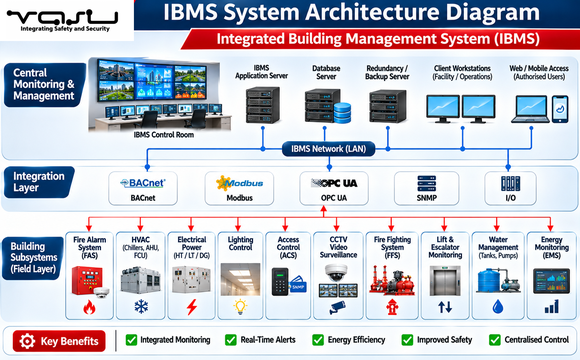
Explore the Integrated Building Management System (IBMS) Architecture and understand how multiple building services are integrated into a centralized monitoring and management platform. This technical guide explains the architecture, key components, working principles and practical applications of IBMS in modern buildings and critical infrastructure.
Learn how IBMS integrates essential building systems, including HVAC, Fire Alarm Systems (FAS), CCTV Surveillance, Access Control, Electrical Systems, Lighting Control, Lifts, Water Management and Energy Monitoring, through a centralized Building Management System (BMS) platform.
Understand the different architectural layers of IBMS, including field devices, controllers, communication networks, integration gateways, supervisory workstations and centralized monitoring platforms. The article also explains the role of communication protocols such as BACnet, Modbus, OPC UA and SNMP in enabling interoperability between different building systems.
Discover how an IBMS operates through real-time data acquisition, system monitoring, alarm management, automated control, event reporting and centralized supervision. Learn about its applications across Data Centres, Airports, Metro Railways, Commercial Buildings, Hospitals, Industrial Facilities and other critical infrastructure.
The guide also covers key engineering considerations such as system integration, network architecture, cybersecurity, redundancy, scalability, interoperability, testing and commissioning requirements.
VASU Infosec Limited provides integrated Fire & Life Safety and Electronic Security solutions, supporting the integration of building systems through coordinated engineering, installation, testing and commissioning services.