
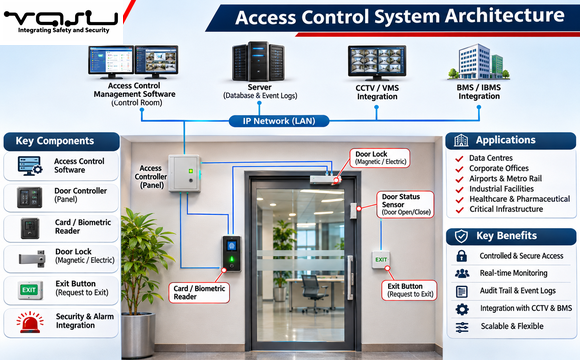
Infographic
Access Control System Architecture – Components, Working & Applications
Nov 2026
An Access Control System manages and restricts entry to authorised personnel within buildings and critical infrastructure. It combines access control software, controllers, biometric readers, card readers and electronic locking devices to provide secure and monitored access.
Key Components
- Access Control Management Software
- Access Control Panels and Door Controllers
- RFID Card and Biometric Readers
- Electromagnetic and Electric Door Locks
- Exit Buttons and Door Status Sensors
- CCTV and Security Alarm Integration
Working Principle
When a user presents an authorised card or biometric credential, the reader sends the information to the access controller. The controller verifies the credentials against configured access permissions and grants or denies entry. Events are recorded in the central management software for monitoring and audit purposes.
Applications
- Data Centres
- Corporate Offices
- Airports and Metro Rail
- Industrial Facilities
- Healthcare and Pharmaceutical Facilities
- Critical Infrastructure
Conclusion
A properly designed access control architecture improves physical security, access monitoring, accountability and operational control. Integration with CCTV, BMS and other security systems supports centralised facility management.