
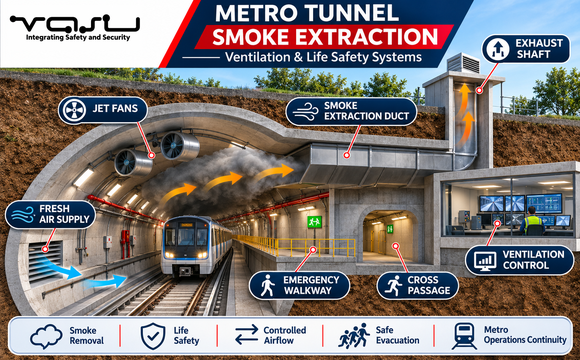
Metro Tunnel, Smoke Extraction, Tunnel Ventilation, Jet Fans, Smoke Control, Metro Fire Safety, Tunnel Fire Protection
Metro Tunnel Smoke Extraction – Ventilation Systems, Working Principle & Fire Safety
Nov 2026
Understand Metro Tunnel Smoke Extraction systems, including jet fans, smoke extraction fans, ventilation shafts and emergency smoke control strategies for underground transportation infrastructure.
Metro Tunnel Smoke Extraction – Ventilation Systems & Fire Safety
Introduction
Metro Tunnel Smoke Extraction is an essential fire safety arrangement designed to control and remove smoke during tunnel fire emergencies. It helps maintain safer evacuation conditions, supports emergency response and reduces smoke accumulation within the tunnel.
Key Components
Jet Fans: Control longitudinal airflow and direct smoke movement.
Smoke Extraction Fans: Remove smoke and hot gases from the tunnel.
Smoke Extraction Ducts: Provide dedicated pathways for smoke removal.
Ventilation Shafts: Discharge extracted smoke to designated outdoor locations.
Fresh Air Supply: Supports the required airflow strategy.
Fire Detection System: Identifies fire conditions and initiates the configured emergency sequence.
Working Principle
During normal operation, tunnel ventilation maintains the required airflow conditions.
When a fire is detected, the fire alarm and tunnel control systems initiate the approved emergency ventilation sequence. Jet fans and smoke extraction fans operate according to the programmed Cause & Effect logic to control smoke movement and extract smoke through designated ducts and shafts.
The ventilation strategy is designed to support emergency evacuation and firefighting operations.
Key Engineering Considerations
Tunnel geometry and length.
Fire scenario and design fire assumptions.
Smoke movement and airflow direction.
Jet fan capacity and positioning.
Smoke extraction fan capacity and temperature rating.
Emergency power supply.
Integration with fire detection and tunnel control systems.
Emergency evacuation and cross-passage arrangements.
Applications
Metro tunnel smoke extraction systems are used in:
Underground Metro Rail Networks.
Railway Tunnels.
Underground Transit Infrastructure.
Road and Highway Tunnels.
Other Enclosed Transportation Facilities.
Conclusion
An effective tunnel smoke extraction strategy combines ventilation engineering, fire detection, smoke control and emergency response planning. Proper system design, integration, testing and commissioning are essential for reliable tunnel fire safety.
VASU Infosec Limited provides Fire & Life Safety and Electronic Security solutions for critical infrastructure, including engineering, installation, testing and commissioning.
Instagram: https://www.instagram.com/vasuinfosec/