
Standard / Code
NFPA 72 – National Fire Alarm and Signaling Code
Nov 2026
1. Introduction to NFPA 72
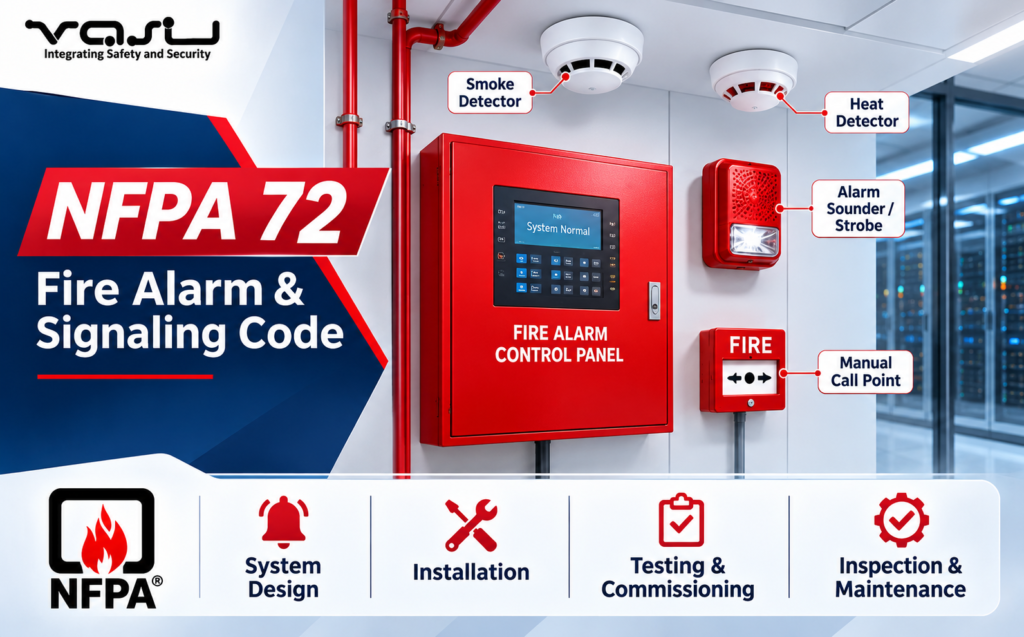
NFPA 72 is the National Fire Alarm and Signaling Code published by the National Fire Protection Association (NFPA). It establishes requirements for the application, installation, performance, inspection, testing and maintenance of fire alarm and signaling systems.
The code aims to support reliable fire detection, emergency notification and life safety through properly designed and maintained systems.
2. Scope & Applicability
NFPA 72 covers the following systems and activities:
- Fire Alarm and Detection Systems.
- Supervising Station Alarm Systems.
- Public Emergency Alarm Reporting Systems.
- Fire and Carbon Monoxide Detection and Warning Equipment.
- Emergency Communications Systems.
- Application, installation, inspection, testing and maintenance.
Its requirements should be applied in accordance with the relevant project specifications and the regulations adopted by the applicable authority.
3. Fire Detection & Alarm System Requirements
Key areas addressed by NFPA 72 include:
- Automatic smoke and heat detection.
- Manual Fire Alarm Stations.
- Fire Alarm Control Panels (FACP).
- Audible and visual notification appliances.
- Alarm signal transmission and monitoring.
- Supervisory and trouble signal indications.
- Emergency communication and voice alarm systems.
4. Major Components of a Fire Alarm System
| Component | Function |
|---|---|
| Smoke Detector | Detects smoke during fire conditions |
| Heat Detector | Detects abnormal temperature rise |
| Manual Call Point | Enables manual alarm initiation |
| Fire Alarm Control Panel | Processes signals and controls system operation |
| Hooter / Sounder | Provides audible warning |
| Strobe Light | Provides visual notification |
| Monitor Module | Monitors external system signals |
| Control Module | Interfaces with external equipment |
| Repeater Panel | Displays system status at a remote location |
5. Technical & Engineering Requirements
Important engineering considerations include:
1. Detector Selection: Select suitable smoke, heat or other detection technologies based on the protected area’s environmental and operational conditions.
2. Device Location: Determine detector and notification appliance locations according to applicable code requirements and site conditions.
3. Circuit Design: Review circuit configuration, cable selection, supervision and system reliability.
4. Voltage Drop Calculation: Verify that notification appliance circuits operate within the equipment manufacturer’s specified limits.
5. Alarm Notification: Ensure suitable audible and visual notification throughout the required areas.
6. System Integration: Coordinate fire alarm interfaces with HVAC, access control, lifts, smoke management and other emergency control functions, where applicable.
7. System Documentation: Maintain approved drawings, device schedules, cause-and-effect matrix and commissioning records.
6. Installation, Testing & Commissioning
Fire alarm systems should be installed and commissioned in accordance with applicable NFPA 72 requirements, approved project drawings and manufacturer instructions.
Installation Requirements:
- Proper installation of detectors and manual call points.
- Correct mounting of alarm notification devices.
- Approved cable routing and circuit identification.
- Proper installation and accessibility of control panels.
- Coordination with other building services.
- Labelling and documentation of system components.
Testing & Commissioning:
- Smoke and heat detector functional testing.
- Manual call point operation testing.
- Alarm sounder and strobe testing.
- Fire alarm panel functionality verification.
- Circuit supervision and fault monitoring checks.
- Cause-and-effect and system interface testing.
- Alarm transmission and monitoring verification, where applicable.
- Preparation of testing and commissioning reports.
7. Compliance Checklist
| Sr. No. | Verification Point |
|---|---|
| 1 | Applicable NFPA 72 edition identified |
| 2 | Fire alarm design drawings reviewed |
| 3 | Detector selection and locations verified |
| 4 | Manual call points provided as required |
| 5 | Alarm notification appliances verified |
| 6 | Fire alarm control panel configuration reviewed |
| 7 | Cable routing and circuit supervision checked |
| 8 | Voltage drop calculations verified |
| 9 | Cause-and-effect matrix reviewed |
| 10 | System interfaces tested |
| 11 | Testing and commissioning reports maintained |
| 12 | Inspection and maintenance arrangements established |
8. Frequently Asked Questions (FAQs)
Q1. What is NFPA 72?
NFPA 72 is the National Fire Alarm and Signaling Code, which establishes requirements for fire alarm, detection, signaling and emergency communication systems.
Q2. What is the latest edition of NFPA 72?
The 2025 edition is the current edition listed by NFPA. Applicable amendments and errata should also be checked.
Q3. Does NFPA 72 cover smoke detectors?
Yes. It addresses the application, installation, performance, inspection and testing of fire detection devices, including smoke and heat detectors.
Q4. Does NFPA 72 cover fire alarm testing?
Yes. It includes requirements relating to inspection, testing and maintenance of fire alarm and signaling systems.
Q5. What is the purpose of a Fire Alarm Control Panel?
The FACP receives and processes signals from initiating devices and manages alarm, supervisory and trouble indications and associated system functions.
Q6. Is NFPA 72 applicable to all building projects?
Its applicability depends on the codes and regulations adopted by the relevant jurisdiction, project requirements and authority having jurisdiction.
Q7. Why is NFPA 72 important for EPC contractors?
It provides a technical reference for fire alarm system design, installation, testing, commissioning and maintenance activities.
Important Reference
NFPA 72 – National Fire Alarm and Signaling Code, 2025 Edition, National Fire Protection Association (NFPA).
Official Reference: https://www.nfpa.org/codes-and-standards/nfpa-10-standard-development/72